
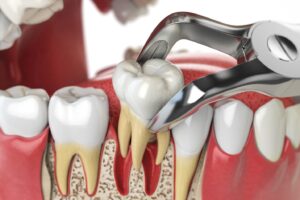
No one looks forward to hearing that they need a tooth removed. After all, preserving your natural teeth is usually a top priority in dentistry. However, there are situations when extracting a tooth is the healthiest and safest option. Removing a problematic tooth can relieve discomfort, prevent complications, and create an opportunity to restore your smile. Your dentist may recommend an extraction for these 4 reasons.
1. Severe Tooth Decay
Cavities can often be treated with fillings, crowns, or other restorative procedures. However, when decay has progressed extensively, there may not be enough healthy tooth structure remaining to save the tooth.
In these situations, attempting to restore the tooth may not provide a predictable long-term result. Extraction removes the damaged tooth and prevents decay or infection from affecting neighboring teeth.
Once the area heals, your dentist can discuss replacement options, such as a dental bridge, partial denture, or dental implant.
2. Advanced Gum Disease
Gum disease doesn’t only affect your gums. In its advanced stages, periodontal disease can destroy the bone and tissues that support your teeth. As this support deteriorates, a tooth can become loose and difficult to save.
If a tooth has lost too much supporting bone, extraction may be recommended to protect your overall oral health. Removing the tooth can also allow your dentist to address the underlying infection and develop a plan for replacing the missing tooth.
Treating gum disease is key to protecting your remaining teeth.
3. A Severely Damaged or Cracked Tooth
A tooth can become cracked or fractured because of an injury, grinding, biting down on something hard, or extensive decay. Some cracks can be repaired with a filling, bonding, or crown, but certain fractures extend too deeply into the tooth.
When a crack reaches the root or causes significant structural damage, the tooth may not be restorable. Extraction can prevent ongoing pain and reduce the risk of infection.
Your dentist will carefully evaluate the damage before determining whether the tooth can be saved.
4. Overcrowding or Problematic Wisdom Teeth
Sometimes extraction is recommended even when a tooth isn’t severely damaged. For example, removing teeth may be part of an orthodontic treatment plan when there isn’t enough room to properly align the remaining teeth.
Wisdom teeth are another common reason for extraction. Impacted or improperly positioned wisdom teeth can cause pain, infection, gum problems, or damage to neighboring teeth. Removing them may prevent these complications.
Although tooth extraction may initially sound concerning, it can be the best option when a tooth cannot be predictably saved or is threatening your oral health. Modern dental techniques make extractions safer and more comfortable than ever. If your dentist recommends an extraction, ask about why it’s necessary and what options are available for replacing the tooth afterward.
About the Author
Dr. Broneil Ishaya grew up right here in Turlock and has been practicing dentistry in his hometown since 2020. He went to dental school at UC San Francisco and has completed countless hours of advanced training, including receiving his Fellowship from Misch Resnik Dental Implantology, which enables him to expertly place implants following tooth extractions. If you need an experienced, highly trained dentist to perform your tooth extraction, we’re here for you at Turlock Dental Studio. Call us at (209) 216-3530 for an appointment or schedule one online.